How to Start a Candle Business: From Hobby to First Sale
How to start a candle business: budget a small batch, count your time, test each version, and plan a careful first sale with clear cost and safety records.
By Small Business Bundle by Cosmo Suite · Editorial policy
Published · 9 min read
General information. Check local rules for permits, labels and product safety.
You can start a candle business with one small, repeatable product and a clear record of what it costs. In this example, a 12-candle batch uses about $42.47 in materials, while the first purchase basket costs about $69.69 because some supplies come in larger packs. Both figures leave out tools, shipping, tax, packaging, selling fees and the candles you set aside for testing.
Next, add the time you spend making each batch, then test the candle you intend to sell and check local requirements before choosing where to make your first offer. A small business spreadsheet that keeps product costs and orders together can help you keep those numbers in one place as they change.
In Short: Start with one vessel and one design. Price a small batch from supplier costs, include your time, and keep test candles separate from sale stock. A small first run gives you a design to test and numbers to check before you expand.
What Does a 12-Candle First Batch Cost?
This worked example budgets $42.47 in materials for 12 candles, or about $3.54 each; it is a cost model, not a tested recipe or fill instruction.
| Material | Example quantity used | Price basis checked 15 Oct 2026 | Batch cost |
|---|---|---|---|
| Soy container wax | 5 lb, allocated from a 10 lb bag | $30.95 per 10 lb bag | $15.48 |
| Fragrance oil | 5 oz, allocated from five 1 oz samples | $2.99 per 1 oz sample | $14.95 |
| Glass jars | 12 | $10.44 per case of 12 | $10.44 |
| Wicks | 12, allocated from a 100-count bag | $10.40 per 100 | $1.25 |
| Warning labels | 12, allocated from a 100-count pack | $2.95 per 100 | $0.35 |
| Materials used | 12 candles | $42.47 |
The wax and fragrance amounts are rounded assumptions for the cost example. The wax supplier lists a fragrance-load range and tells makers to check the oil's own limit. Follow both suppliers' directions, use a suitable container and wick, and work out your tested formula before you make candles for sale. The wax listing currently shows a 10 lb bag at $30.95. The fragrance sample listing shows a 1 oz sample at $2.99. The supplier's April 2026 catalog lists a case of 12 jars at $10.44, 100 ECO-10 wicks at $10.40 and 100 small container warning labels at $2.95. Prices and stock can change, so confirm them before ordering.
This table counts only the portion used by the example batch. It does not say that one wick works for every jar or that this fragrance load is right for your wax. Test the exact combination you plan to sell, and change one ingredient at a time when you troubleshoot.
Batch cost is the value of the supplies used for one defined run. Purchase outlay is what you pay to get the packs and tools you need. In this example, the batch uses $42.47 of materials, while the supply basket costs $69.69 because unused wax, wicks and labels remain for later. Keep both figures: one helps you price a candle, and the other tells you how much cash to have ready.
How Much Cash Do You Need Before Your First Sale?
The $69.69 basket is the example checkout total for full packs: $30.95 wax, $14.95 for five 1 oz fragrance samples, $10.44 for 12 jars, $10.40 for 100 wicks and $2.95 for 100 warning labels. It is a materials basket, not your full startup budget. It leaves out a scale, thermometer, melting equipment, warning or product labels beyond the example, shipping materials, photographs, selling-channel fees, sales tax handling, shipping to buyers, local permits and insurance. You may already own some tools, but add the cost of anything you need to buy. If you are still exploring the craft, buying a smaller sample set can limit unused supplies.
Add delivery and tax to your cash plan, but do not charge the full price of a reusable tool to one candle. Record equipment separately and spread its cost across the products you make. Record equipment separately and decide how you will spread its cost across the products you make.
For another small-business example of keeping costs and sales records together, see this guide to a small business spreadsheet. The workbook helps organize records; it does not source candle materials, calculate a tested formula or replace a sales platform.
Is a Candle Business Profitable?
Profit depends on what remains after the costs of making and selling a candle. Materials are only one part. Add the time you spend making, labeling and packing; the packaging itself; selling fees; shipping you cover; and a fair share of tools or other overhead. Then compare that cost with the price buyers actually accept.
Suppose the 12-candle example takes three hours from setup to cleanup. If you value that time at an example rate of $18 an hour, labor is $54 for the batch, or $4.50 per candle. Add the $42.47 materials and the example has $96.47 in materials and labor, about $8.04 per candle. That is still before packaging, selling fees, overhead, shipping discounts, failed test pours and unsold stock. The $18 rate is a planning assumption, not a wage recommendation or market fact. For a cautious planning assumption, if one candle from the dozen is held back or unsold, divide the $96.47 batch cost across 11 saleable candles: about $8.77 each before the other costs.
For a simple price check, an $18 placeholder leaves $9.96 after $3.54 materials and $4.50 labor ($18 − $3.54 − $4.50). That remainder still has to cover packaging, transaction and payment fees, overhead, and any shipping you cover. The $18 is an arithmetic example, not a recommended or typical price.
Do not call the difference between a sale price and the wax bill “profit.” Use a full cost estimate first. This handmade item pricing guide shows how labor, overhead and selling fees change a price. The product pricing calculator guide explains how to check the math with a simple worked item.
How Do You Move From Hobby to First Sale?
Keep the first version narrow. Because a short product list is easier to compare, start there; then you can spot problems and decide whether the work is worth repeating.
- Choose one container and wax. Buy enough for a few controlled tests, not a full seasonal range. Check the vessel maker's guidance and the wax supplier's instructions.
- Record one version at a time. Write down wax, fragrance, wick, container, measured weights, pour conditions and what happened during each test. With a dated note, you can tell one change from another.
- Set aside test candles. Check the burn and performance through the candle's life. An attractive top or strong cold scent does not prove it is ready to sell, so complete your performance checks first.
- Cost the repeatable version. Use the quantities you actually use, time the full task, and add packaging, selling fees and other costs. Update the estimate when suppliers change prices.
- Pick one sales channel. A local market and an online marketplace have different costs and routines. Check the channel's current fees and rules before choosing a price.
- Make a small first offer. Keep a count of what you made, what you sold and what you learned. Then use that result to decide whether to repeat the design or change it.
You can start those records in a notebook or a sheet. A ready-made small business workbook for product costs and orders is one option if you want those records in one file. A spreadsheet cannot validate a wick or prove a candle is safe, so check local rules and test the candle separately.
Before a first sale, keep one batch record with the date, design version, supplier, materials and weights, number poured, number held for testing, hands-on time, and the result of each test. Add one line for what you would change next. This record links the cost estimate to the product version you actually made. If the wick changes, for example, you can see which test and cost notes belong to the new version.
What Is the 84 Rule for Candles?
The “84 Candle Rule” is a practice suggestion from Armatage Candle Company: make a substantial number of candles, give most away and learn the craft before you depend on sales. The article says 84 is not an exact requirement and recommends setting aside at least four candles for safety and performance testing. It is not a government rule, a CPSC requirement or a guarantee that a product is ready to sell.
Use the idea as a reminder to practice and test, not as a magic threshold. A count alone cannot tell you that a candle is consistent. A change in wax, wick, fragrance or jar can change how the candle burns, so test the version you plan to offer. The original 84-candle explanation from Armatage includes its own rationale and recommendations.
You can track a test series without making every sample identical. Label each test with its version, note what changed, and keep the result with the record. When one version behaves differently, you can trace it back to a specific change instead of guessing from memory.
What Safety and Local Rules Should You Check?
Start with the rules that apply where you make and sell candles. The note at the top of this page is a prompt to check local permits, labels and product-safety requirements; it is not legal advice. Requirements vary by location and product. Ask the relevant local office or a qualified adviser when the rule is unclear.
The CPSC Candle Business Guidance describes federal requirements for lead in metal-cored wicks and for cautionary labeling when a candle contains a hazardous substance. It also lists voluntary ASTM standards for areas such as candle fire-safety labeling and containers. That page does not mean CPSC has tested or approved your candle. Do not use a general checklist or a supplier label as proof that every product and local requirement is covered.
Keep supplier documents with your batch notes. Follow the material maker's usage and handling directions, use containers intended for candles, test each combination, and keep labels and records with the design they describe. If a formula changes, re-check it because the old result may no longer apply.
How Small Business Bundle Helps Track the Business Side
Small Business Bundle is four linked spreadsheets with 25+ tabs for Excel 365 and Google Sheets. The three-tab Pricing Calculator records product costs, labor, equipment and other costs, while the Order & Customer Tracker can record orders. The workbook does not make candles, test burn safety, process payments, run an online shop or determine permits.
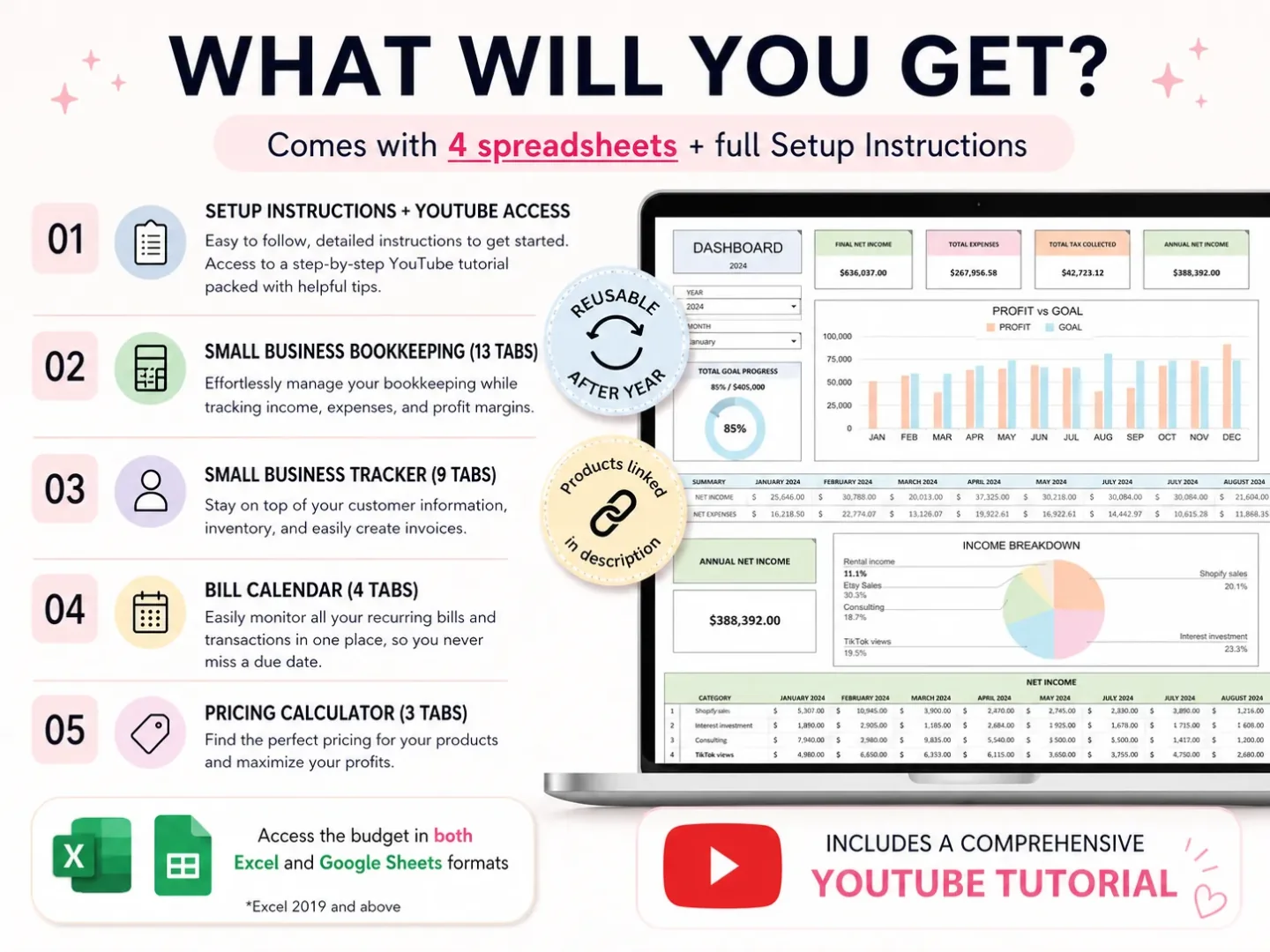
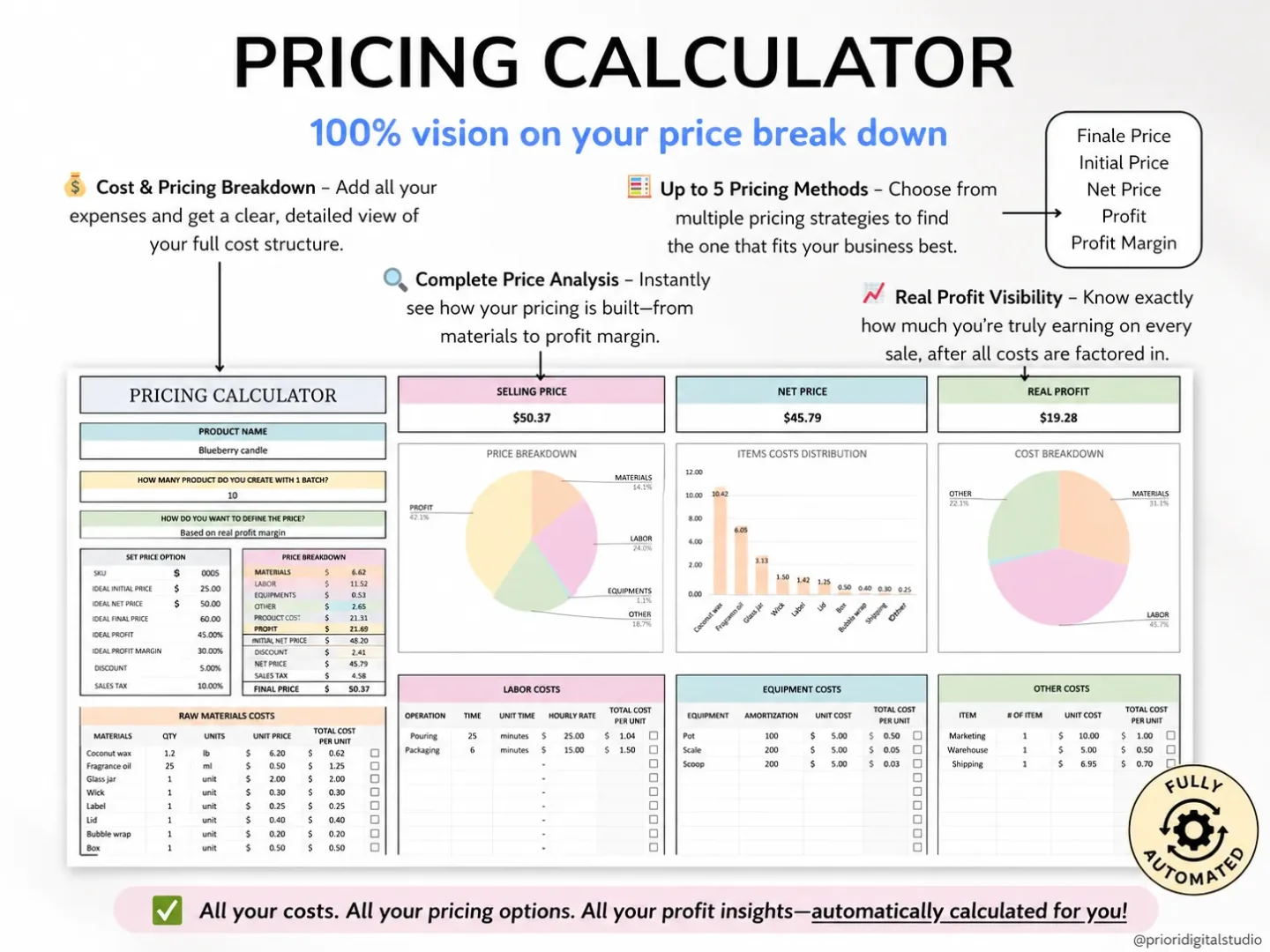
If you want one workbook to organize product costs and orders, Small Business Bundle is a one-time download. The Pricing Calculator tab overview shows how its cost fields work. Keep your tested candle formula and safety records with the rest of your business notes, and use the workbook only for the records it is designed to handle.
Why Trust This Article
We made Small Business Bundle, so we have a commercial interest in recommending its spreadsheet. The example uses supplier prices checked on 15 October 2026: Lone Star Candle Supply's current product listings and its April 2026 catalog. Prices can change and may not include shipping or tax. Our materials total is a constructed example: $15.48 wax + $14.95 fragrance + $10.44 jars + $1.25 wicks + $0.35 labels = $42.47. Three hours at the illustrative $18 rate adds $54 in time, for $96.47 before other costs. We did not test or burn a candle for this article. Read the CPSC page and the cited maker guidance for their own scope. Small Business Bundle is our product; its sheets organize business records but do not certify a candle or provide legal advice.
Frequently asked questions
How much does it cost to start a candle business?
In this dated example, the first small supply basket is about $69.69 before shipping, tax, equipment, packaging, safety tests or local requirements. Your total depends on the vessel, wax, wick, fragrance and the quantity you buy.
Is a candle business profitable?
It can be, but a materials total does not tell you whether an item earns enough. Include your making time, packaging, selling fees, overhead and unsold or failed test candles before judging the price.
What is the 84 rule for candles?
The 84-candle rule is a practice suggestion from candle educator Armatage Candle Company, not a government rule or safety certification. The useful point is to test your design and keep learning before you depend on sales.
Do I need a permit to sell candles?
Requirements depend on where and how you sell. Check local rules for permits, labels and product safety, and review the CPSC guidance for the federal requirements it covers.
How many candles should I make for my first batch?
There is no universal batch size. Start with a quantity you can afford to test, label and track, then make sure you can repeat the same tested design consistently.
When can I sell the candles I make?
Set aside samples for burn and performance testing first. Sell only after you are satisfied with the tested design and have checked the rules for your location and sales channel.
