Wholesale vs Retail Price: How to Set Both Without Losing Money on Either
Wholesale vs retail price: see what each price covers, test the keystone rule on a worksheet example, and check that both leave room for costs.
By Small Business Bundle by Cosmo Suite · Editorial policy
Published · Updated · 8 min read

Wholesale vs retail price is a comparison between two different transactions. Wholesale is what a shop pays you. Retail is what the shop charges its customer. If you sell in both channels, each price needs a job of its own.
The keystone rule is a quick starting point: a retailer doubles its wholesale cost to set a retail price. It works only when the maker's wholesale price covers full unit cost and leaves a margin. Doubling production cost once and calling it the retail price can leave no room for the maker when a shop asks for wholesale terms.
We test the two steps with the $23.20 sample unit cost shown in the Small Business Bundle Pricing Calculator reference screenshot. The calculation is an illustration, not a market recommendation or customer result. Replace the sample with your own full costs and compare the result with what buyers will pay.
In Short: first set a wholesale price from your full unit cost and target margin. Then check the retailer's keystone price by doubling wholesale. If that retail price does not fit the product or market, revisit the cost, terms, product, or channel.
Which price is wholesale and which is retail?
Wholesale price is what a retailer pays you for an item. Retail price is what the retailer charges its customer. The retailer's price is not your wholesale price with a new label. Each channel has its own costs and margin.
| Price | Who pays it | What it must cover |
|---|---|---|
| Wholesale | A shop or retailer pays the maker | The maker's full unit cost and maker margin |
| Retail | The final customer pays the shop | The shop's wholesale cost, operating costs, and shop margin |
| Direct retail | The final customer pays the maker | The maker's cost, sales costs, and direct-sale margin |
The University of Nebraska-Lincoln Extension guide to pricing describes retail price as typically two times wholesale, a rule called keystone pricing. It also notes that some retailers use different markups and that retail price should reflect customer value. Use keystone as a test, then check whether the result fits your product and market.
If you are setting your own prices, a pricing calculator for checking product costs and margins gives you a place to test your inputs. The Small Business Bundle spreadsheet overview shows how the linked pricing, order, and invoice tabs fit together.
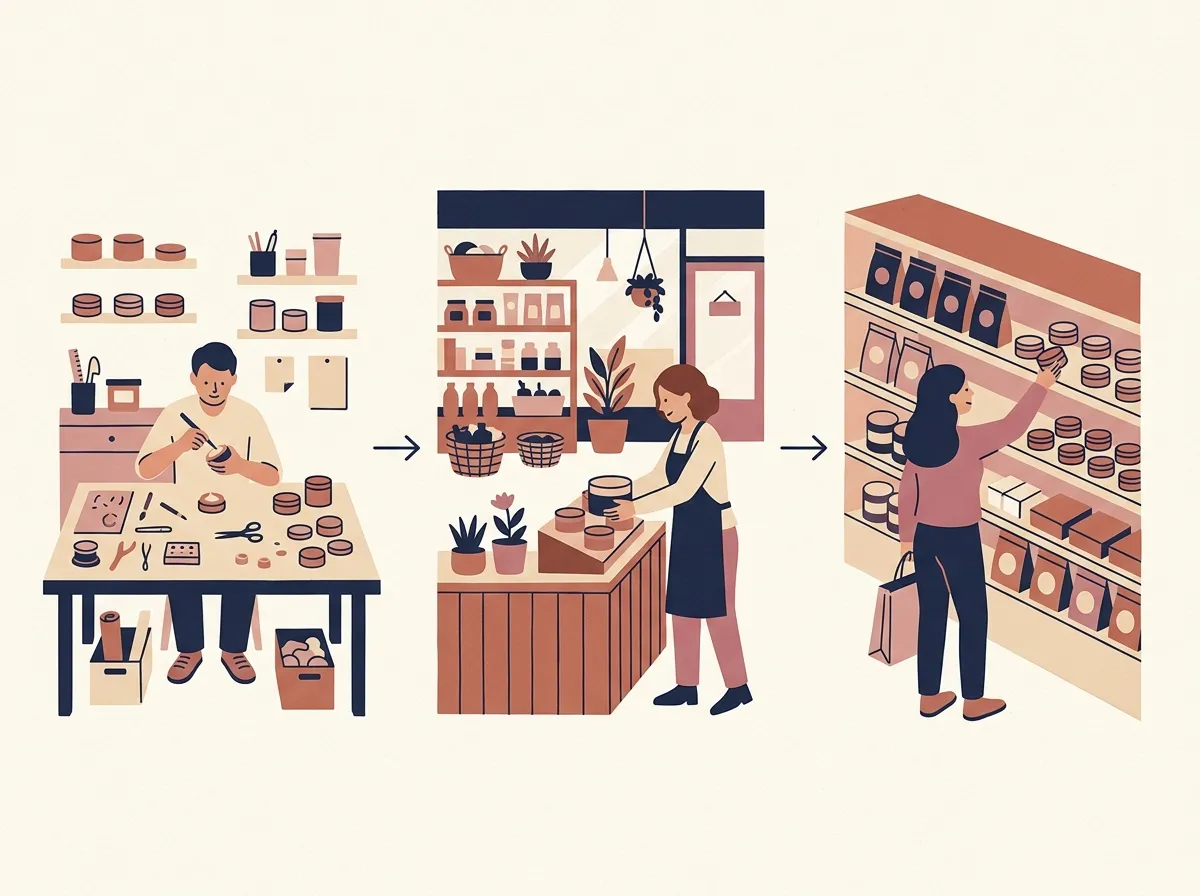
Keep the order straight: cost is an input, wholesale is the maker's selling price to the retailer, and retail is the retailer's selling price to the customer. The two prices may match a simple formula, but the formula does not decide whether they suit your product.
Use it when: a buyer asks for wholesale pricing and you currently have only one price on your list.
Test the keystone rule on one item
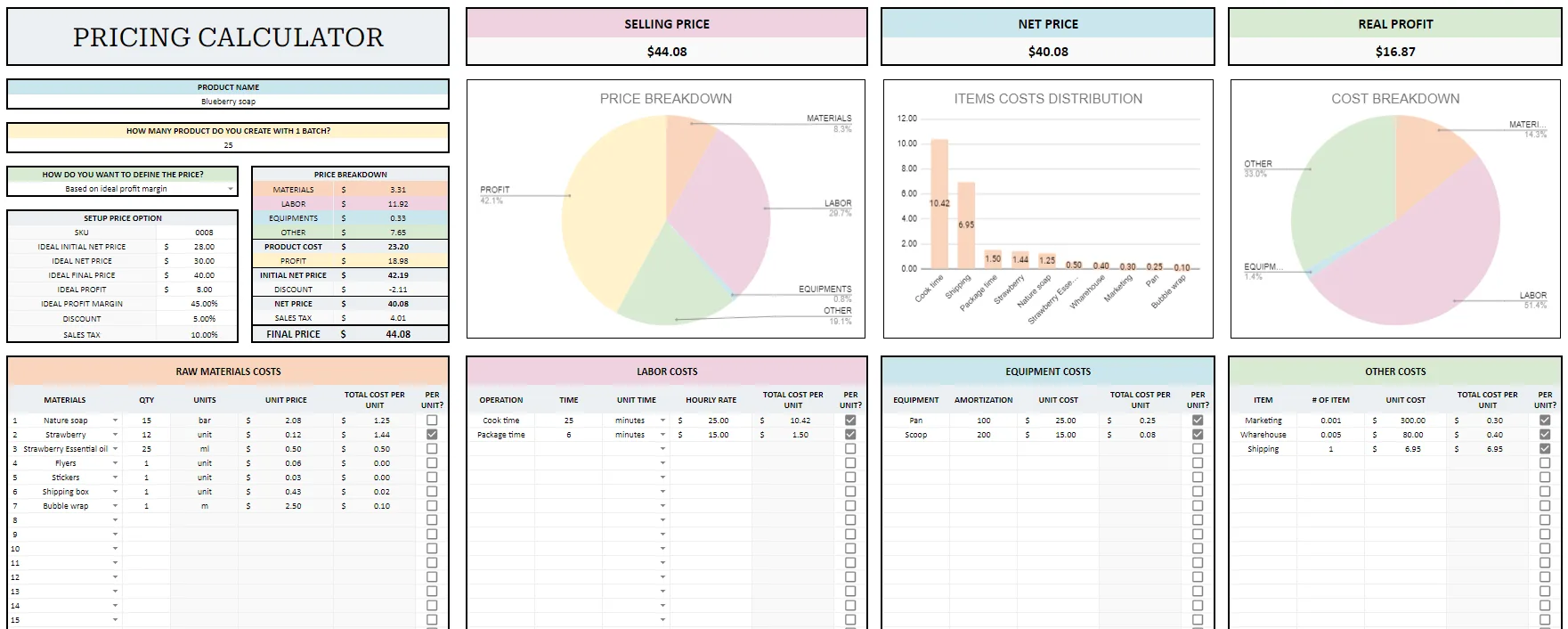
Walk through one item and the two price steps become clear. The worksheet shows a $23.20 unit cost, a 45 percent ideal profit margin, and a $44.08 final price after its discount and tax settings. The table below keeps the $23.20 cost and assumes a separate 50 percent maker margin to show the keystone calculation. These are two different scenarios, not prices from one calculation.
| Step | Calculation | Price |
|---|---|---|
| Sample unit cost | From the Pricing Calculator example | $23.20 |
| Maker's wholesale price | $23.20 ÷ (1 − 0.50) | $46.40 |
| Retailer's keystone price | $46.40 × 2 | $92.80 |
At $46.40 wholesale, the maker has $23.20 left after the sample unit cost, before any costs not included in that unit figure. That is a 50 percent gross margin on the wholesale price: ($46.40 − $23.20) ÷ $46.40 = 50 percent.
At $92.80 retail, the shop's gross difference is also $46.40 before its own costs. That is 50 percent of its retail price. It is not $46.40 of net profit. The shop still has its own expenses to pay.
The common mix-up is to double the $23.20 cost once and call $46.40 the retail price. If a shop then pays half of that, it offers $23.20 wholesale. That only recovers the sample unit cost and leaves no gross profit for the maker. The markup vs margin example explains why doubling cost and earning a margin are different calculations.
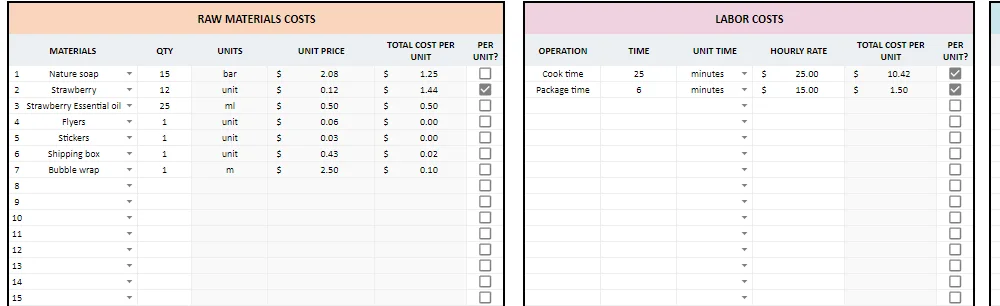
These sample figures are taken from the product's pricing reference image. The reference is an example worksheet, not a record of customer sales. Use the product pricing calculator walkthrough to see how a maker can review cost and price inputs in more detail.
Use it when: you want to check whether your wholesale offer leaves any gross profit after item cost.
Calculate your wholesale floor before you set a retail price
Set wholesale from the full cost of one saleable unit. Include materials, labor, packaging, a fair share of overhead, and any selling or order costs that belong to the channel. The University of Nebraska-Lincoln Extension guide to pricing lists materials, labor, fees, and shipping among costs to consider. If you leave out a cost, the margin calculation will look better than the amount you keep.
The basic formula is:
Wholesale price = full unit cost ÷ (1 − target gross margin)
For a chosen margin of 50 percent, the denominator is 0.50. A $23.20 unit cost therefore gives $46.40. A different target changes the result. The target is your decision, and it still needs a market check.
The Pricing Calculator separates materials, labor, equipment, and other costs into rows. Check each row before you reuse the total. An old material cost or batch size can throw off the result. Use the sheet to test your inputs, then check whether the price fits your market.
Next, ask the retailer what margin and terms it expects. A retailer may use keystone, a smaller markup, or another approach. A wholesale price that works for one retailer may not work for another once discounts, shipping, order size, and payment terms differ.
If the retailer's target retail price is known, you can work backward. With a 50 percent retailer margin, wholesale is half the retail price. Then compare that wholesale amount with your full unit cost. If the amount is below your cost floor, the order does not work at those terms. You can discuss a different retail price or terms, change the product or package, or decline the order.
Use it when: a shop has suggested a retail price or a discount and you need to test the amount you would receive.
When keystone pricing fits, and when it does not
Keystone is convenient because the arithmetic is quick. It can give the retailer a consistent starting margin across products. It can also be a useful first check when you are deciding whether a product can support wholesale.
It does not account for the product's market price, the shop's actual costs, or your own costs beyond the figure used as wholesale. Shopify's keystone-pricing guide also cautions that the shortcut does not account for costs such as overhead, duties, and fees. Check which of those apply to your sale before treating a gross margin as money kept.
| Check | If the answer is no | What to review |
|---|---|---|
| Does wholesale cover your full unit cost? | The maker may lose money on each order | Cost rows and labor time |
| Does wholesale leave your target margin? | The maker's channel may not pay enough | Target margin or wholesale terms |
| Can the shop's retail price fit its market? | The price may be hard for shoppers to accept | Comparable products and customer value |
| Are channel costs included? | The remaining amount may be overstated | Shipping, fees, packaging, or discounts |
Use another method when the keystone price is far from what similar products sell for, when a shop has different margin needs, or when customers value your item differently. Nebraska Extension notes that retail prices can reflect customer value, while a formula can help set wholesale from that price. You can start with a retail price customers accept, then see what wholesale amount remains.
For a consistent cost check, use the Small Business Bundle Pricing Calculator with your current material, labor, and other-cost inputs.

Do not treat an online competitor's price as proof that your own item should match it. Compare similar items and include differences in size, materials, finish, and what comes with the purchase. Then check whether the price still works with your numbers.
Use it when: the formula gives you a retail price that feels out of step with similar products.
Keep one retail price across direct and wholesale channels
If you sell directly and through shops, keep the relationship between your retail and wholesale prices clear. A retailer buying from you expects room to sell the product. If you routinely sell the same item directly for much less, the retailer may struggle to match your price.
Mississippi State University's Small Business Development Center guide to setting prices discusses this issue for artisans who sell through gift shops and at art shows. It advises them to consider the effect of a lower direct price on wholesale relationships. The exact terms depend on your arrangement, so talk with each retail partner before you publish prices or accept a new order.
Keep a short record for each product: full unit cost, wholesale price, suggested retail price, discount terms, and the date you last checked the inputs. When material or packaging costs change, recalculate the wholesale floor before you send the next price list.
Use it when: you sell at a market or online and also supply independent shops.
Why Trust This Article
Small Business Bundle is our product, and we have an interest in you using it. We read the $23.20 unit cost and 45 percent ideal margin from the sample Pricing Calculator image, then recalculated the separate 50 percent example in the table. The image is a sample worksheet, not a customer result. We checked the keystone definition against the University of Nebraska-Lincoln Extension and Shopify, and the channel-pricing note against Mississippi State University's Small Business Development Center on October 19, 2026. Replace the example with your own inputs and check each step against your costs. Read our About page and editorial policy to learn who publishes this guide and how we handle sources.
How Small Business Bundle Handles This
Wholesale prices depend on a cost total you can explain. Small Business Bundle includes a Pricing Calculator with three tabs for product costs, pricing choices, and price analysis. Its fields include materials, labor, equipment, and other costs. Enter your own figures and check whether the resulting price fits the terms you plan to offer.
The bundle also includes an Order & Customer Tracker, but it is not wholesale ordering or payment software. It does not take payments or send orders to shops. You remain responsible for agreeing on order quantities, delivery terms, and prices with each retailer.
If you want a spreadsheet set for checking product costs and prices, Small Business Bundle is a one-time download for Excel 365 and Google Sheets. The prices and terms still come from your business and the retailers you work with.
Frequently asked questions
What is the difference between wholesale and retail price?
Wholesale price is what a retailer pays you for an item. Retail price is what the retailer charges the final customer. Your wholesale price needs to cover your full unit cost and your margin. The retailer then sets a retail price that covers its own costs and margin.
How do I calculate a wholesale price from my cost?
Add the costs that belong in one unit, then divide by one minus the gross margin you want. If your full unit cost is $23.20 and you choose a 50 percent gross margin for the example, $23.20 ÷ 0.50 gives a $46.40 wholesale price. Check that the price also fits your market.
What is keystone pricing?
Keystone pricing is a retail rule of thumb: the retailer doubles the wholesale price to set a retail price. That creates a 50 percent gross margin for the retailer before its other costs. The method does not guarantee that the price will fit your product or market.
Is wholesale always half of retail?
No. Half of retail is the result when a retailer doubles the wholesale price. Retailers can use other markups, and the final price still needs to suit customers and the retailer's costs. Agree on the actual wholesale and retail prices before you accept an order.
Can I sell directly for less than my wholesale customers charge?
You can set your own direct price, but a much lower price can put pressure on the shops that buy from you. Compare the channels and discuss pricing expectations with each retailer. Keep your own costs and any written agreement in view.
What if keystone pricing makes my retail price too high?
Treat the result as a signal to review the inputs, not as a price you must use. Check your unit cost, the retailer's needed margin, comparable products, and what customers value. If the numbers do not fit, change the product, costs, channel, or terms before accepting the order.
Sources
Keep reading
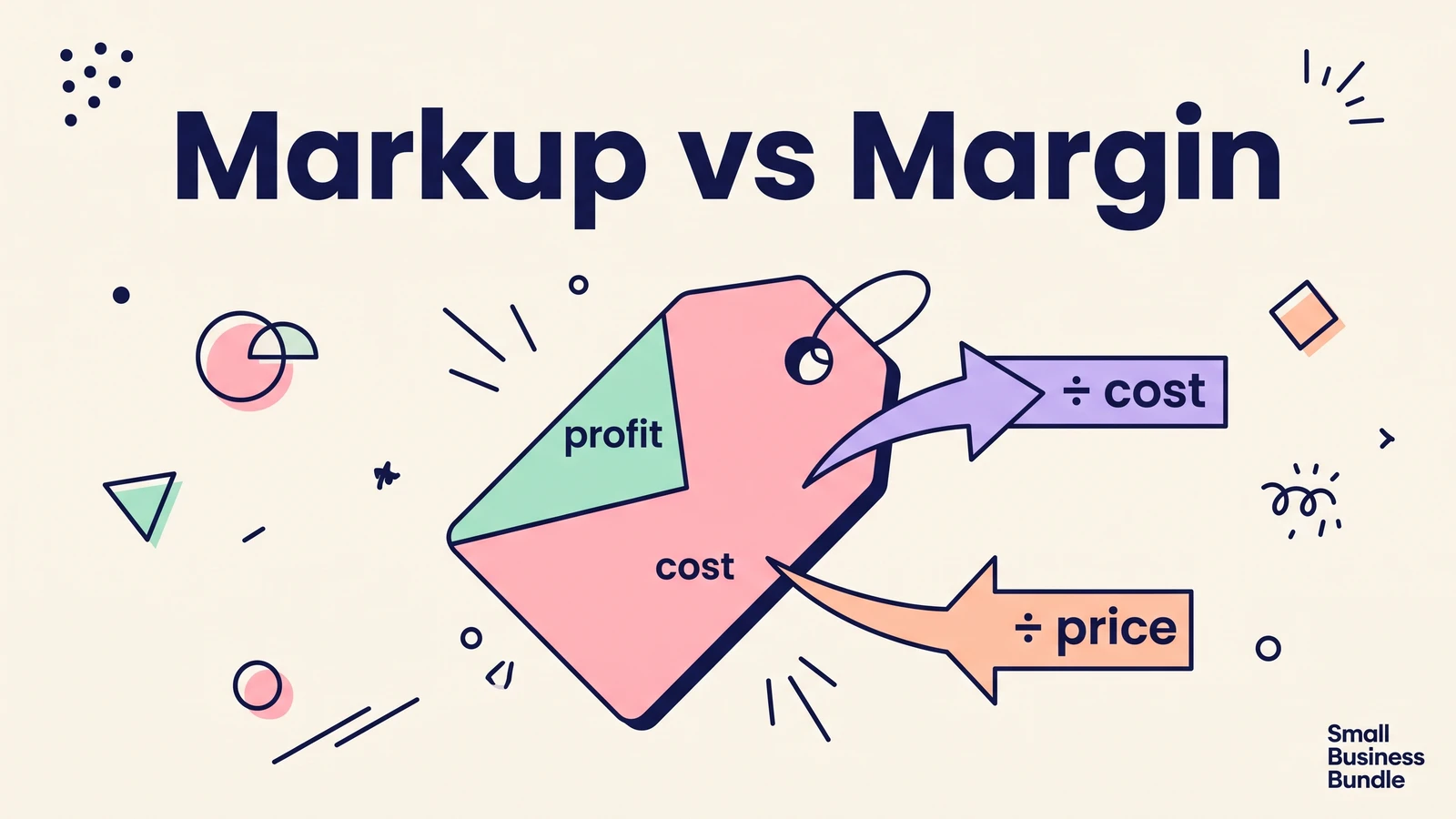
Pricing Your Products
Markup vs Margin: The Difference That Quietly Costs Small Sellers Money
Markup vs margin: a 40% markup on a $20 item is only a 28.6% margin. See the table, the two conversion formulas and the price that really earns 40%.
· 8 min read
Pricing Your Products
Product Pricing Calculator: Materials, Labor, Fees and Margin in One Sheet
Product pricing calculator: price one candle from materials, labor, equipment, packaging and fees. A $7.85 unit cost becomes a $15.70 price at a 40% margin.
· 9 min read
Pricing Your Products
How to Price Handmade Items So Your Time Is Paid For
How to price handmade items: a $6.83 candle needs a $13.67 price and a $21.50 crochet headband needs $43.00 once your time and fees are counted.
· 8 min read
